
Kitten Development
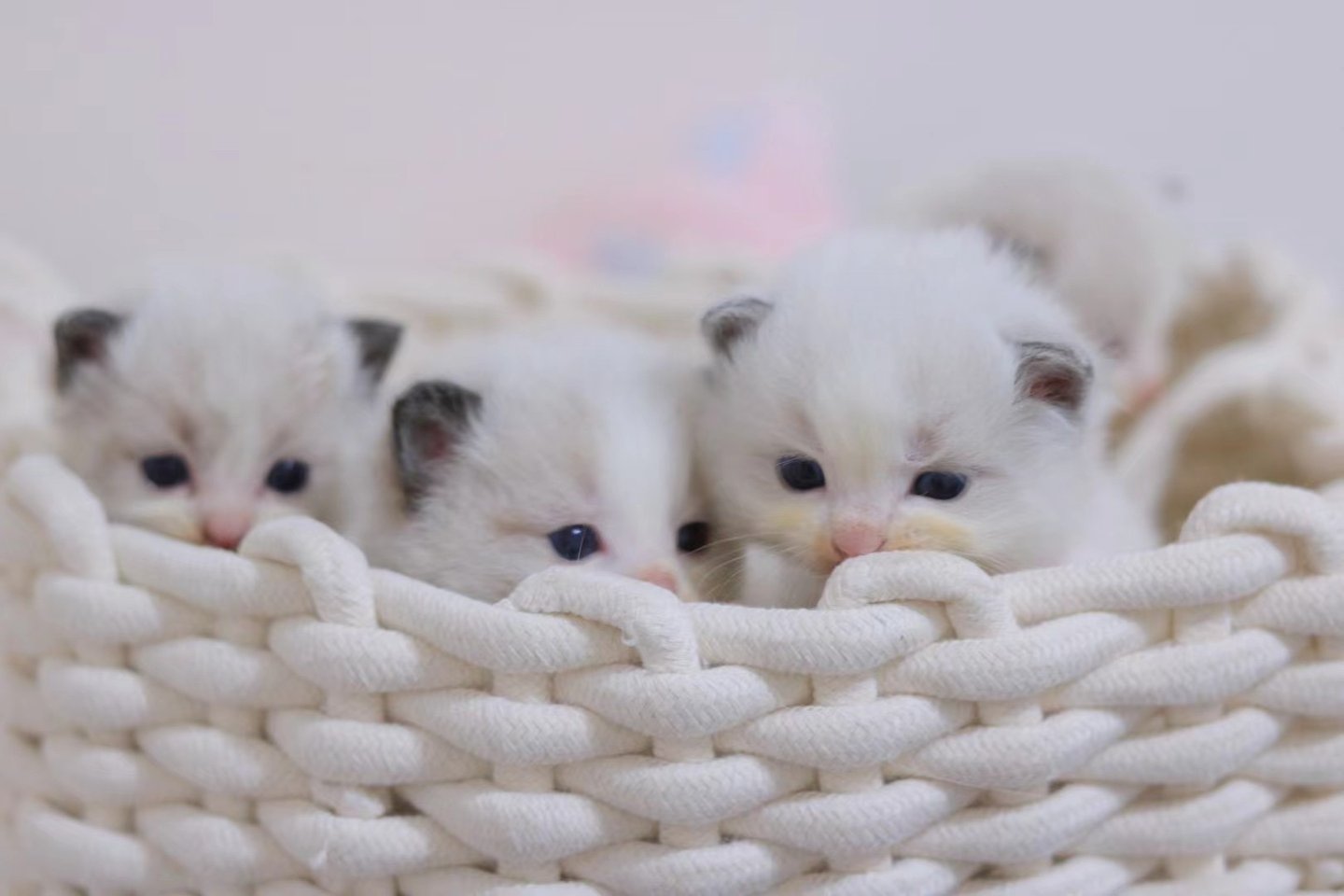
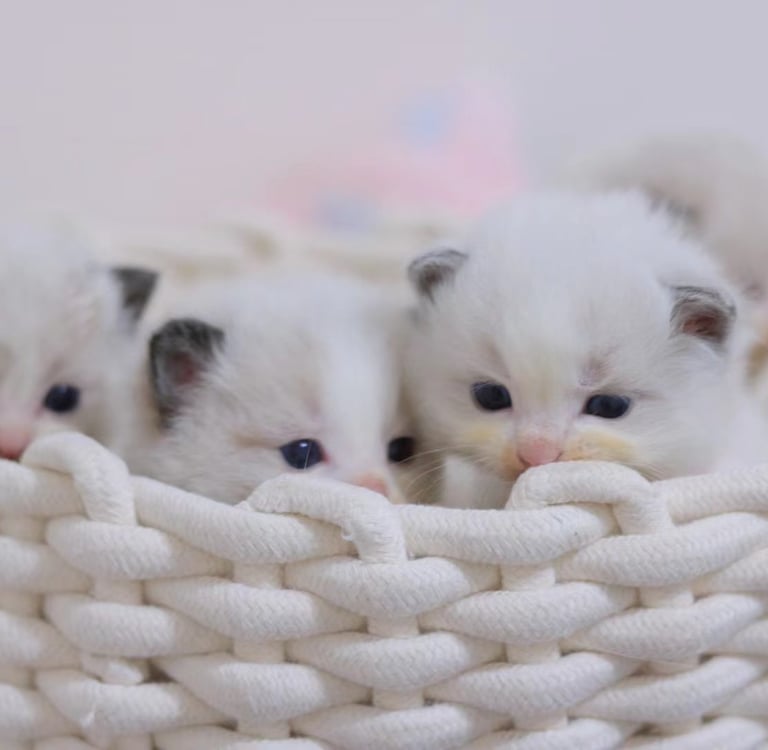
Pregnancy and Birth
Ragdoll kittens are typically born between 60 and 68 days after mating, usually at around 65 days.
Newborn Kittens
Newborn Ragdoll kittens usually weigh between 70 and 120 grams at birth. At this stage, they rely mainly on their sense of smell to locate their mother and find a teat.
Most of their time is spent nursing and sleeping. They are unable to eliminate waste independently, so the mother stimulates them by gently licking their genital and anal areas.
1 Week Old
Newborn kittens typically gain around 10 grams per day and may spend up to eight hours a day nursing.
At this age, they are particularly vulnerable to cold and dehydration. Their ear canals gradually begin to open, and they may purr, hiss or cry when hungry or uncomfortable.
2 Weeks Old
As the kittens develop, they may begin using scent to locate a preferred teat. They start crawling more confidently, attempting to stand, rolling over and practising early pouncing movements.
Their eyes also begin to open, while their colours and patterns gradually become more visible.
3 Weeks Old
At three weeks, the kittens’ eyesight continues to improve, making them more curious and adventurous.
They begin playing with their littermates, gain better control over their movements and start developing their first teeth. They may also purr when receiving attention, making this an important stage for gentle handling and early socialisation.
4 Weeks Old
At this stage, kittens begin grooming themselves and learning important behaviours from their mother.
They become increasingly interested in exploring their surroundings, may begin trying wet and dry kitten food and usually start learning to use the litter tray.
5 Weeks Old
By five weeks, kittens can usually walk confidently, play actively with their littermates and show greater interest in human interaction.
Although they continue to nurse from their mother, solid food becomes an increasingly important part of their diet.
6–7 Weeks Old
During this period, kittens become highly active and curious. They will play with almost anything they can find and begin developing their coordination and problem-solving skills.
They also learn how to use scratching posts and enjoy playing with a variety of age-appropriate toys.
8 Weeks Old
At approximately two months old, a healthy Ragdoll kitten may weigh around 800 grams, although weight can vary depending on sex, litter size, genetics and individual development.
Kittens spend much of their time playing with their littermates. This interaction is essential for developing confidence, communication skills and appropriate social boundaries.
9 Weeks Old
At this age, kittens continue to develop their coordination, motor skills and natural hunting behaviours.
Playfulness is generally a positive indication of good health. They also learn important boundaries from their mother and littermates.
Many kittens will have their first veterinary examination and initial vaccination at around this age, depending on the vaccination schedule followed by the breeder and veterinarian.
10–11 Weeks Old
During this stage, the kittens’ coats become thicker and fuller, giving them a rounder and fluffier appearance.
Their colours gradually deepen, and their points become more defined. They also tend to have a strong appetite to support their rapid growth and high energy levels.
12 Weeks Old
At around twelve weeks, kittens may receive another veterinary health check and their second vaccination, depending on the recommended vaccination schedule.
Natural weaning is normally well underway by this stage. Remaining with their mother and littermates during this important developmental period helps them build confidence and learn appropriate social behaviour before leaving for their new homes.
13–14 Weeks Old
Many pet kittens are spayed or neutered at this age before leaving for their permanent homes.
The exact timing will depend on the kitten’s weight, physical development and the advice of the attending veterinarian.
4–5 Months Old
Between four and five months of age, kittens often experience another period of rapid growth and may require more food than usual.
After this stage, their growth rate may gradually begin to slow, although individual growth spurts can still occur.
6 Months and Older
At six months old, many Ragdoll kittens weigh approximately 2.5–2.7 kilograms, although males, females and different bloodlines may develop at different rates.
Growth may begin to slow, but occasional growth spurts are still normal. As development can be unpredictable, kittens should be weighed regularly and monitored to ensure that they are receiving enough food to meet their nutritional and calorific needs.
The teenage stage may also bring the first signs of unwanted behaviour. Ragdolls are generally intelligent and responsive to training, so consistent interaction, enrichment and positive reinforcement can help encourage good habits.
12 Months and Older
From approximately 12 months of age, Ragdolls gradually enter their adult stage. However, they may continue developing physically between one and four years of age.
During this period, they often become calmer and more settled while maintaining their affectionate and playful personalities.
Their coat continues to mature, their eye colour becomes more established, and their overall head and body structure becomes more defined.
Ragdoll cats generally take around three years to reach full physical maturity.
An adult male Ragdoll commonly weighs between 5 and 7 kilograms, while an adult female usually weighs between 3 and 5 kilograms. Individual size may vary depending on genetics, body structure, diet and overall health.